Historical Map & Newspaper Junk Journal: A Creative Journey
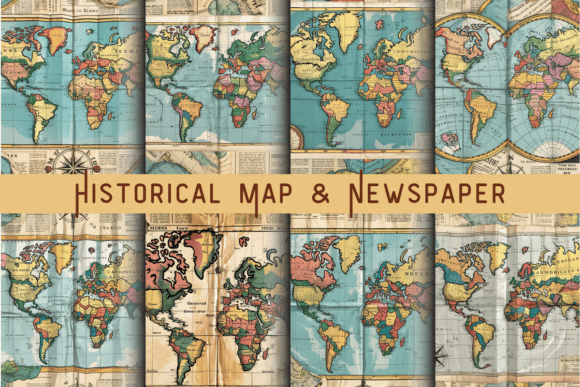
There's something deeply satisfying about holding a piece of history in your hands—the yellowed edges of an old newspaper, the intricate lines of a centuries-old map, the faded typography that whispers of another era. For crafters, designers, and storytellers, these authentic textures aren't just decorative; they're portals to the past. The Historical Map and Newspaper Junk Journal Digital Paper Pack captures this nostalgic essence in a versatile digital format, offering twelve high-resolution designs that blend antique maps, vintage newspaper clippings, aged paper textures, and distressed typography. Whether you're building a genealogy scrapbook, designing branding for a heritage-inspired business, or crafting a steampunk-themed invitation, this collection provides the raw materials to make your projects feel genuinely timeless.
Why Vintage Ephemera Resonates with Modern Creators
In an age of sleek minimalism and flat design, there's a growing hunger for authenticity—textures that feel human, imperfect, and layered with meaning. This is where collections like the Historical Map and Newspaper Junk Journal pack shine. Each page is designed at 12x12 inches (3600x3600 pixels) with 300 DPI resolution, ensuring crisp detail whether you're printing at archival quality or using the assets digitally. The sepia, cream, and neutral color palette avoids the harshness of modern digital palettes, offering a subdued warmth that pairs beautifully with both muted and bold accent colors.
What makes these designs particularly useful is their opacity and versatility. Unlike semi-transparent overlays that can muddy your work, these backgrounds are fully opaque, allowing you to layer them confidently beneath text, photographs, or other design elements without worrying about underlying layers showing through unexpectedly. The file sizes—ranging from 8 to 18 MB per page—reflect the richness of detail packed into each design, from the fine print of vintage newspaper columns to the delicate cartographic lines of antique maps.
Practical Applications Across Creative Disciplines
The beauty of a well-curated ephemera collection is its adaptability. For graphic designers and branding professionals, these textures offer an immediate way to inject heritage and narrative into client work. Imagine a boutique hotel's website using a faded map as a hero background, or a craft distillery's label design incorporating distressed newspaper textures to evoke Prohibition-era authenticity. The designs work seamlessly in Adobe Illustrator, Photoshop, Canva, Procreate, or any software that supports PNG files.
For small business owners and entrepreneurs in niches like antique retail, genealogy services, historical tourism, or artisanal crafts, consistent visual branding can be a challenge. This collection solves that by providing a cohesive aesthetic foundation. Use the same vintage typography style from the pack across your social media graphics, product packaging, and printed materials to create instant brand recognition. The aged paper textures work particularly well for:
- Product packaging: Labels for handmade soaps, candles, or gourmet foods gain immediate character with a distressed map background.
- Social media content: Instagram posts and Pinterest pins using these textures stand out in feeds dominated by clean, modern aesthetics.
- Digital products: E-book covers, printable planners, and online course materials acquire a premium, artisanal feel.
- Event invitations: Wedding invitations, anniversary announcements, or history-themed party invites gain depth and personality.
- Editorial layouts: Magazine spreads, blog headers, and newsletter designs benefit from the layered, tactile quality.
For hobbyists and crafters, the applications are equally rich. Junk journal enthusiasts know that the magic lies in the layers—combining different textures, ephemera, and personal mementos to create a cohesive visual story. These digital papers serve as perfect starting points for collage work, scrapbook pages, or mixed-media art projects. Print them out, tear the edges, layer them with washi tape and handwritten notes, and you've created something that feels genuinely personal and historically evocative.
Integrating Vintage Textures into Modern Design Workflows
One common concern when working with vintage-style assets is avoiding a design that feels dated or cluttered rather than intentionally nostalgic. The key lies in balance and intentional pairing. Use these historical map and newspaper backgrounds as a foundation layer, not the entire composition. Pair them with clean, modern sans-serif typography for contrast—think a bold geometric font overlaid on a faded cartographic background. This juxtaposition creates visual interest and ensures your work feels contemporary while honoring historical aesthetics.
When selecting which of the twelve designs to use, consider the mood you're aiming to evoke. The antique map pages—with their compass roses, longitude lines, and place names—work beautifully for travel-related projects, adventure branding, or educational materials. The newspaper texture pages, with their columns of faded text and vintage mastheads, lend themselves to editorial designs, literary projects, or any context where storytelling is central. Many of the pages combine multiple elements, offering rich, layered compositions that can serve as standalone backgrounds or be cropped and repurposed for smaller design elements.
Color coordination is another practical consideration. The pack's neutral palette—sepia tones, creams, and distressed grays—means these assets won't clash with your existing color schemes. They act as a warm, organic base that complements everything from deep burgundies and navy blues to soft sage greens and dusty rose accents. If you're working on a brand identity system, consider extracting color swatches directly from the digital papers to build a complementary palette that feels cohesive and intentional.
Commercial Considerations and Quality Assurance
For designers and entrepreneurs using these assets in commercial projects, understanding licensing is essential. Always review the specific terms provided with your purchase to ensure compliance—most digital paper packs are licensed for both personal and commercial use, but restrictions may apply to direct resale of the unmodified files. When incorporating the designs into client work, your final deliverable (the finished design, not the raw asset) is typically what's covered.
The technical specifications of this collection support professional workflows. At 300 DPI and 3600x3600 pixels, the files are print-ready for large format applications and scalable for digital use without quality loss. This resolution ensures that even when printed at full 12x12 inch size—the standard for many scrapbook albums and junk journals—the textures remain sharp and detailed. For digital applications, you can comfortably reduce the size for web use while retaining the richness that makes these designs compelling.
Ultimately, what sets a collection like this apart is the careful curation behind it. Rather than offering generic "old paper" textures, the Historical Map and Newspaper Junk Journal pack presents thoughtfully composed designs that tell a story. Each page feels like a discovered artifact—a fragment of a map that guided sailors across unknown seas, a clipping from a newspaper that reported on events long past. For creators who value narrative in their work, this collection isn't just a set of backgrounds; it's an invitation to step back in time and bring that history forward into something new.